
Strain Pattern Ecg
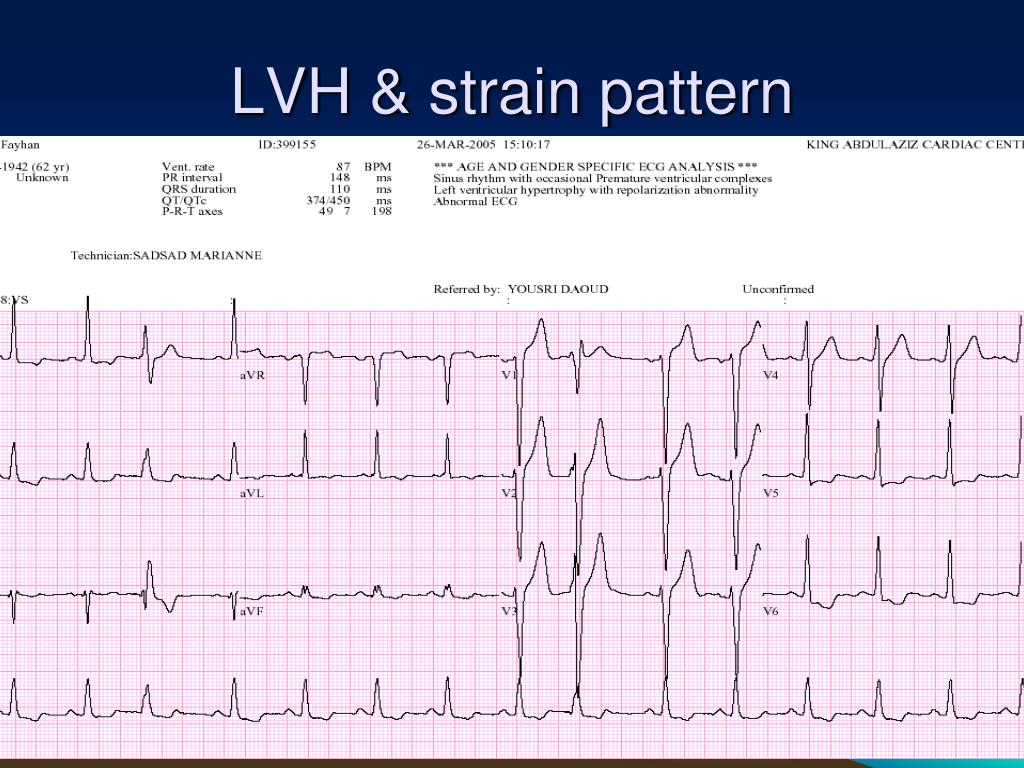
Strain Pattern Ecg - For confirmation of lvh, an echocardiogram is recommended. Web lvh with strain pattern can sometimes be seen in long standing severe aortic regurgitation, usually with associated left ventricular hypertrophy and systolic dysfunction. St depression and t wave inversion in leads corresponding to the right ventricle: The same data quoted specificity ranging from 89.8% to 100%. This pattern has been classically associated with systolic anterior motion (sam) of the mitral valve and dynamic left ventricular outflow tract (lvot) obstruction. Web the most common ecg dilemmas one encounters is to differentiate between the st segment depression and t wave inversion due to lvh from that of primary ischemia. Web the electrocardiogram (ecg) is a useful but imperfect tool for detecting lvh. However, whether ecg strain is an independent predictor of cardiovascular (cv) morbidity and mortality in the setting of aggressive antihypertensive therapy is unclear. Web the strain pattern in the 12‐lead ecg, defined as st‐segment depression and t‐wave inversion, represents ventricular repolarization abnormalities.1 the mechanism underlying ecg strain is unclear, although it has been proposed as subendocardial ischemia.2, 3 ecg strain is associated with concentric left ventricular (lv) hypertrophy. Web this ecg* demonstrates a strain pattern isolated to v5 and v6. Web there will be discordant st segments and t waves, which is called the strain pattern. We investigated the mechanisms and outcomes associated with ecg strain. This ecg is from a man with left ventricular hypertrophy. Web the most common ecg dilemmas one encounters is to differentiate between the st segment depression and t wave inversion due to lvh from that of primary ischemia. Web right ventricular strain is a repolarisation abnormality due to right ventricular hypertrophy (rvh) or dilatation. Web the strain pattern in the 12‐lead ecg, defined as st‐segment depression and t‐wave inversion, represents ventricular repolarization abnormalities.1 the mechanism underlying ecg strain is unclear, although it has been proposed as subendocardial ischemia.2, 3 ecg strain is associated with concentric left ventricular (lv) hypertrophy. Web ecg changes in left ventricular hypertrophy (lvh) and right ventricular hypertrophy (rvh). The sensitivity of lvh strain pattern on ecg as a measure of lvh has ranged from 3.8% to 50% in various reports [1]. 2,6 ecg strain has been. Web baseline characteristics of patients with and without ecg strain. The utility of the ecg relates to its being relatively inexpensive and widely available. Web this multiethnic study of adults without past cardiovascular disease showed that ecg strain is associated with a higher risk for all‐cause death, incident heart failure, myocardial infarction, and incident cardiovascular disease independent of ecg left ventricular (lv) hypertrophy measured by qrs. Web left ventricular hypertrophy. Web this ecg* demonstrates a strain pattern isolated to v5 and v6. Typical lv strain pattern was presented on ecgs of 101 patients (23%). Web left ventricular hypertrophy with strain. We investigated the mechanisms and outcomes associated with ecg strain. Web ecg strain pattern was associated with poorer lv systolic function and abnormal lv geometry, particularly eccentric lvh. No relationship was found with lv diastolic function. The utility of the ecg relates to its being relatively inexpensive and widely available. Typical lv strain pattern was presented on ecgs of 101 patients (23%). Web the strain pattern in the 12‐lead ecg, defined as st‐segment depression and t‐wave inversion, represents ventricular repolarization abnormalities.1 the mechanism underlying ecg strain is unclear,. Web ecg strain pattern was associated with poorer lv systolic function and abnormal lv geometry, particularly eccentric lvh. Web there will be discordant st segments and t waves, which is called the strain pattern. Typical lv strain pattern was presented on ecgs of 101 patients (23%). Web this multiethnic study of adults without past cardiovascular disease showed that ecg strain. Huge precordial r and s waves that overlap with the adjacent leads (sv2 + rv6 >> 35 mm). Web left ventricular hypertrophy with strain. Web left ventricular hypertrophy (lvh): Web this ecg* demonstrates a strain pattern isolated to v5 and v6. Web the most common ecg dilemmas one encounters is to differentiate between the st segment depression and t wave. No relationship was found with lv diastolic function. Web left ventricular hypertrophy with strain pattern (example 3) | learn the heart. We investigated the mechanisms and outcomes associated with ecg strain. Web there will be discordant st segments and t waves, which is called the strain pattern. Web left ventricular hypertrophy with strain. Web ecg left ventricular hypertrophy with strain is associated with an adverse prognosis in aortic stenosis. Web left ventricular hypertrophy with strain pattern (example 3) | learn the heart. Huge precordial r and s waves that overlap with the adjacent leads (sv2 + rv6 >> 35 mm). Web the strain pattern in the 12‐lead ecg, defined as st‐segment depression and. Web ecg changes in left ventricular hypertrophy (lvh) and right ventricular hypertrophy (rvh). Web there will be discordant st segments and t waves, which is called the strain pattern. This pattern has been classically associated with systolic anterior motion (sam) of the mitral valve and dynamic left ventricular outflow tract (lvot) obstruction. It also is easier to diagnose in supraventricular. Web the most commonly observed pattern is asymmetrical thickening of the anterior interventricular septum (= asymmetrical septal hypertrophy ). Web left ventricular hypertrophy with strain. The same data quoted specificity ranging from 89.8% to 100%. Web right ventricular strain is a repolarisation abnormality due to right ventricular hypertrophy (rvh) or dilatation. Web ecg changes in left ventricular hypertrophy (lvh) and. This pattern has been classically associated with systolic anterior motion (sam) of the mitral valve and dynamic left ventricular outflow tract (lvot) obstruction. The sensitivity of lvh strain pattern on ecg as a measure of lvh has ranged from 3.8% to 50% in various reports [1]. Web baseline characteristics of patients with and without ecg strain. However, whether ecg strain. Web the strain pattern in the 12‐lead ecg, defined as st‐segment depression and t‐wave inversion, represents ventricular repolarization abnormalities.1 the mechanism underlying ecg strain is unclear, although it has been proposed as subendocardial ischemia.2, 3 ecg strain is associated with concentric left ventricular (lv) hypertrophy. Web baseline characteristics of patients with and without ecg strain. Web right ventricular strain is a repolarisation abnormality due to right ventricular hypertrophy (rvh) or dilatation. Web left ventricular hypertrophy with strain pattern ecg (example 1) | learn the heart. Web ecg left ventricular hypertrophy with strain is associated with an adverse prognosis in aortic stenosis. 2,6 ecg strain has been. Web ecg strain pattern was associated with poorer lv systolic function and abnormal lv geometry, particularly eccentric lvh. Web this multiethnic study of adults without past cardiovascular disease showed that ecg strain is associated with a higher risk for all‐cause death, incident heart failure, myocardial infarction, and incident cardiovascular disease independent of ecg left ventricular (lv) hypertrophy measured by qrs. Web this ecg* demonstrates a strain pattern isolated to v5 and v6. Typical lv strain pattern was presented on ecgs of 101 patients (23%). St depression and t wave inversion in leads corresponding to the right ventricle: This pattern has been classically associated with systolic anterior motion (sam) of the mitral valve and dynamic left ventricular outflow tract (lvot) obstruction. Web there will be discordant st segments and t waves, which is called the strain pattern. Huge precordial r and s waves that overlap with the adjacent leads (sv2 + rv6 >> 35 mm). For confirmation of lvh, an echocardiogram is recommended. Web left ventricular hypertrophy with strain.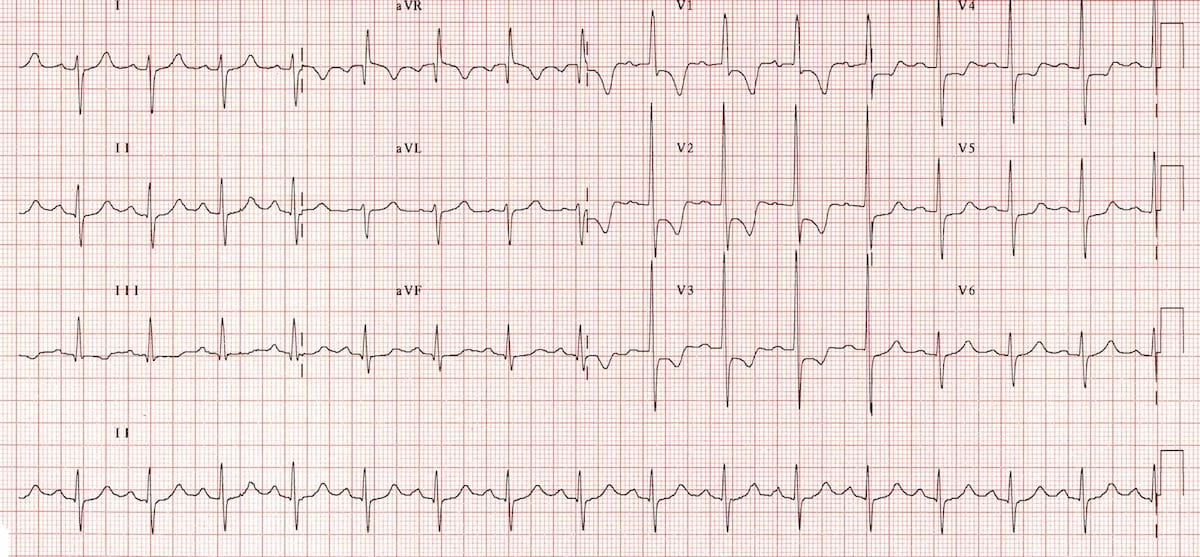
Right Ventricular Strain • LITFL • ECG Library Diagnosis

Prognostic Value of Changes in the Electrocardiographic Strain Pattern
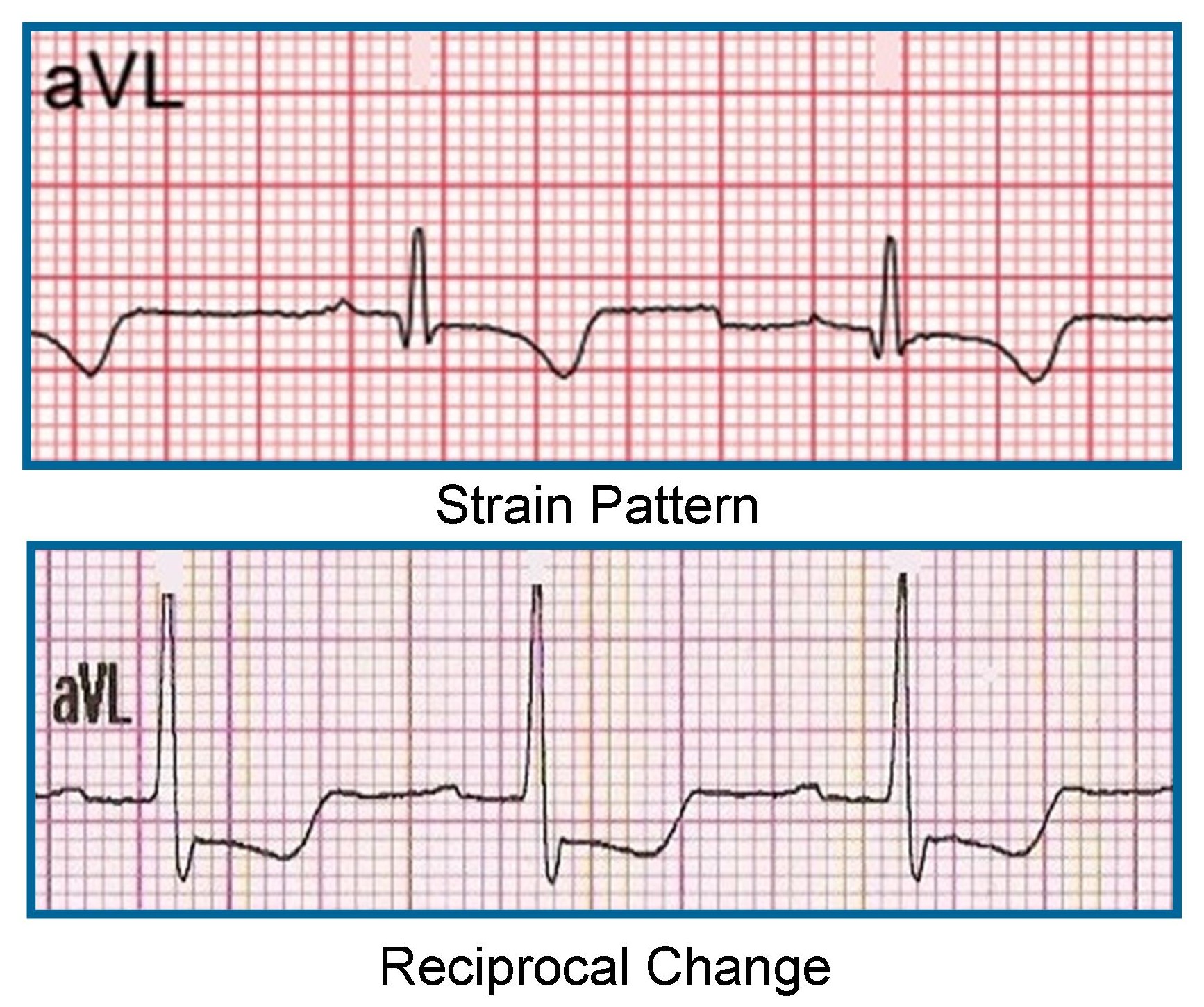
Importance of Lead aVL in STEMI Recognition ECG Medical Training
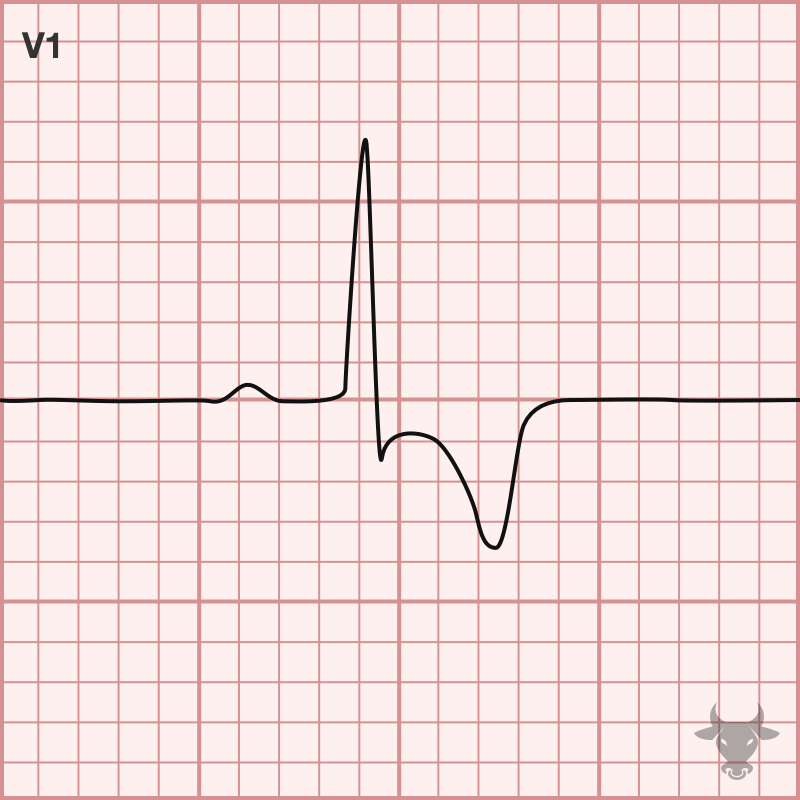
Right Heart Strain ECG Stampede
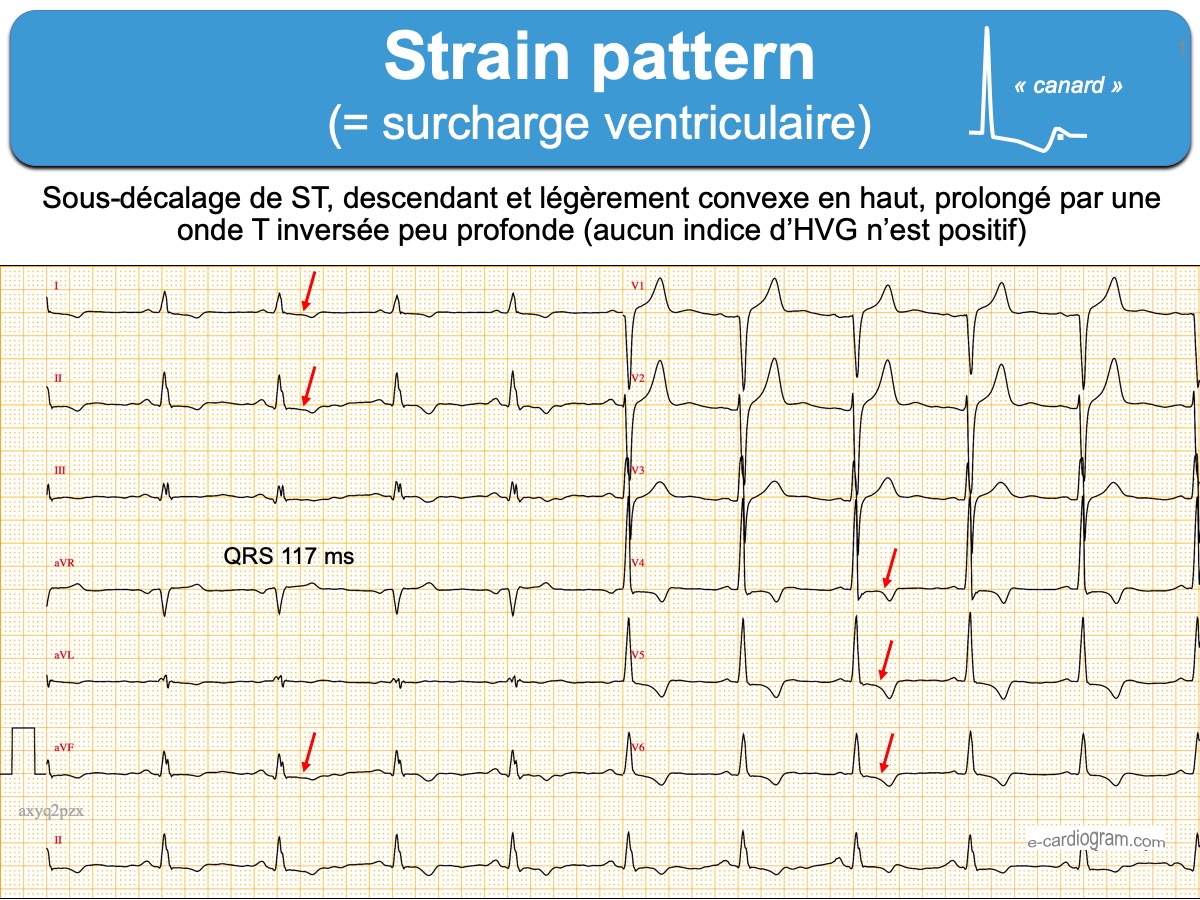
Strain pattern ecardiogram

Strain, strain rate and speckle tracking Myocardial deformation ECG
.jpg)
ECG Interpretation ECG Interpretation Review 51 (Chamber Enlargement

Right ventricular hypertrophy (RVH) ECG criteria & clinical

ECG Class Keeping ECGs Simple ECGclass Summer 3 Aortic Stenosis
PPT ECG PRACTICAL APPROACH PowerPoint Presentation, free download
Recently, Ecg Strain Pattern Has Been Shown To Be Associated With Inappropriate Left Ventricular Hypertrophy.
The Sensitivity Of Lvh Strain Pattern On Ecg As A Measure Of Lvh Has Ranged From 3.8% To 50% In Various Reports [1].
No Relationship Was Found With Lv Diastolic Function.
The Same Data Quoted Specificity Ranging From 89.8% To 100%.
Related Post: